The most useful haveli plan begins with a name and an access question. Are you visiting a museum, a heritage hotel or a building still used privately? Those distinctions decide what you can see and how long it makes sense to stay. This guide uses Jaisalmer as a starting point and keeps the day manageable.
Two Jaisalmer places to research first
Patwon Ki Haveli: begin with the carved facade
Incredible India’s Patwon Ki Haveli guide describes a group of five mansions associated with merchant wealth. It is a useful starting point for visitors interested in carved facades and historic domestic architecture. Before arriving, establish which section you intend to visit and what your ticket includes; do not assume every part has identical access.
Nathmal Ji Ki Haveli: look at how the details fit together
The Indira Gandhi National Centre for the Arts record documents Nathmal Ji Ki Haveli in Jaisalmer. If it is on your shortlist, confirm current visitor arrangements and allow time to study the entrance and projecting window details. A heritage listing is historical context, not permission to enter private rooms.
Use Rajasthan Tourism’s city overview for a wider list, then narrow it according to your interests. Avoid choosing solely because a photograph is popular: ask whether you want an interior, an architectural walk, a guided explanation or simply time to look closely.
The questions worth asking before you pay
- Name and location: what is the exact property and entrance? Is a similarly named hotel or museum a different place?
- Visitor access: which rooms, courtyards or floors are open on your intended date?
- Cost: what does the quoted ticket cover? Are guide services or photography charged separately?
- Physical access: how many steps are involved, are there places to sit, and can the visit be shortened?
- Photography: are cameras, phones, flash or tripods restricted? Are people or private areas excluded?
- Practical needs: where are the nearest toilets, water and a reasonable meeting point for the return journey?
Save the answers with your booking details. If you are travelling with someone who has specific access needs, a clear question about a threshold or staircase is more useful than asking whether a place is “easy.”
A suggested half-day that leaves room to enjoy it
- Arrive with time to orient yourself. Check the correct entrance and ticket conditions before joining a queue.
- Take one slow look at the whole building. Notice the relationship between the street, entrance, courtyard and upper levels before concentrating on details.
- Choose three features. A doorway, a window and a decorated surface are enough to start a useful conversation with a guide or to make thoughtful notes.
- Pause before adding another property. Find a suitable place for a drink or meal. Let the group decide whether another visit adds something different.
- Record the correct name. Keep the ticket or a photograph of a permitted sign so the images retain their context later.
This is a proposed sequence, not a claim about how long every haveli takes. People who enjoy architectural detail may want much longer than someone making a brief first visit.
What to look for once you are inside
Follow the path of light: where does the courtyard open, which rooms face it, and how do upper-level openings relate to the space below? Look at carved brackets, the depth around a window and how a doorway frames the next room. Read the venue’s interpretation before assigning a story to a feature. If a guide names a period or owner, ask where that information is recorded.
Keep the visit considerate
Stay in permitted areas, avoid touching delicate decoration and ask before photographing people. Do not move furniture for a better frame. In a narrow street, take turns rather than spreading the group across the entrance. A quieter approach also makes it easier to notice the craft you came to see.
Common questions
Can I visit a heritage hotel without staying there?
Only if the property permits it. Ask directly about day visitors, dining bookings, photography and which areas are available. Being a hotel does not make the whole building a public attraction.
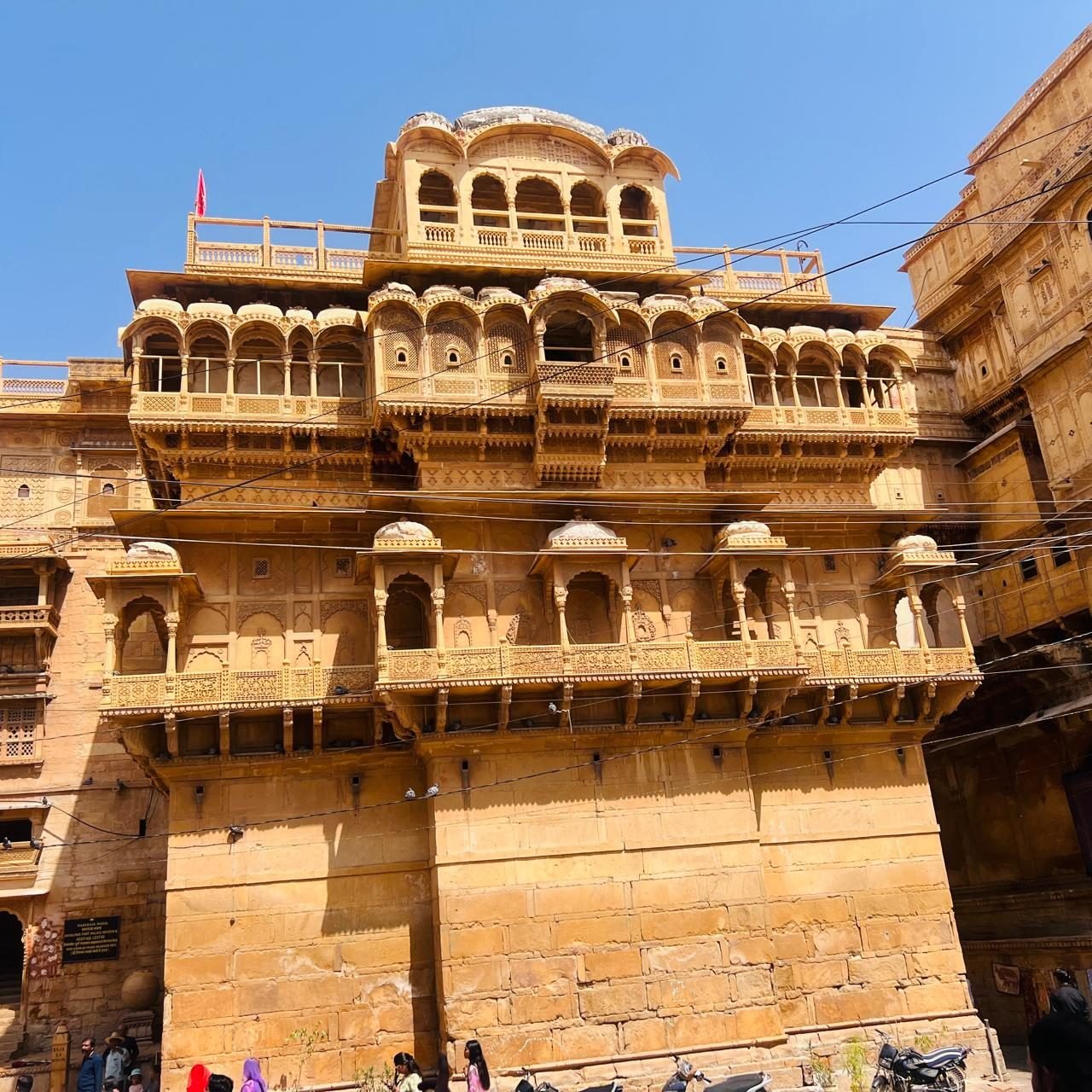
Does the main photograph show Patwon Ki Haveli?
It is a photograph from Sundra’s Rajasthan collection. The exact property has not been independently confirmed for this caption, so it is used as visual context rather than an identification.
Is this a review of a particular guided tour?
No. It is a planning guide with official heritage references. No operator, ticket package or paid tour is being reviewed or endorsed.
Updated 13 November 2026 · Sources: Incredible India, IGNCA and Rajasthan Tourism. Check prices, opening times and access directly before travelling.