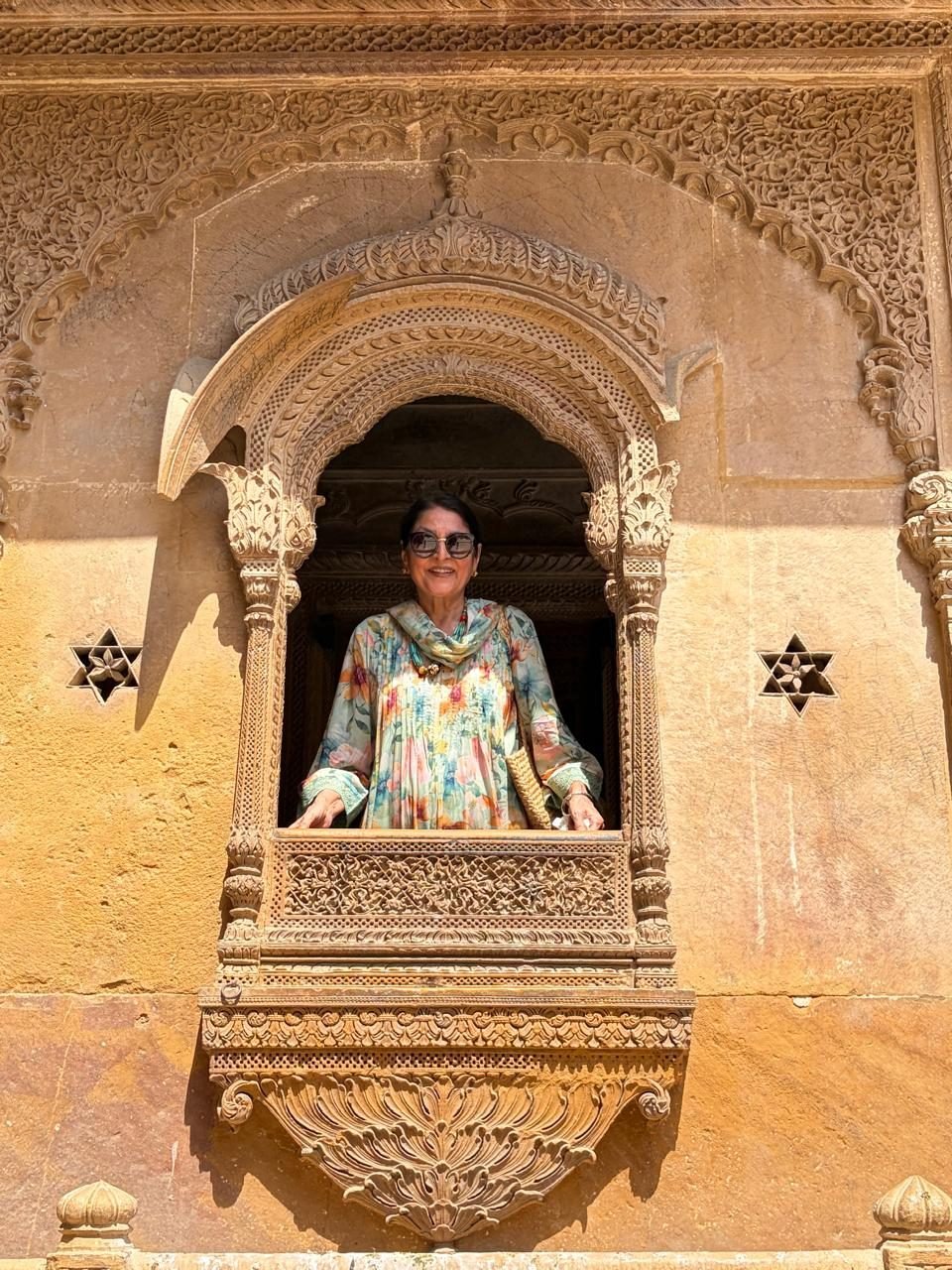
A wide photograph records the building; a closer look starts to reveal the work. In Jaisalmer’s carved windows and doorways, the interesting details often sit at the edges: the support below a balcony, a repeated pattern around an opening or the depth of a stone frame. Give those details a little of your walking time.
Four things to notice
The opening and its frame
Start with the shape of the window or door. Is the decoration concentrated around the edge, or does it continue across the wall? Compare the entrance with the smaller openings above it. The difference in scale is often easier to understand from across the lane than from directly underneath.
The supports below a projecting window
Look underneath as well as above. Brackets, ledges and the spaces between them can be as carefully worked as the front. The IGNCA record for Nathmal Ji Ki Haveli describes decorated projecting windows, lattice patterns and brackets, offering useful context for the kinds of features to look for. It does not identify the building in every photograph on this page.
Repetition, then variation
Follow a repeated flower, border or geometric form with your eye. Where does it change at a corner or around a curve? A single pattern can help you see how a small detail contributes to the whole facade. Keep observations separate from historical claims: a visual similarity alone does not establish a building’s date or maker.
Light and depth
Notice where the carving throws a shadow. From one position, fine work can look almost flat; a different angle may show its depth. Walk to another permitted viewpoint rather than reaching across a barrier or leaning on the stone.
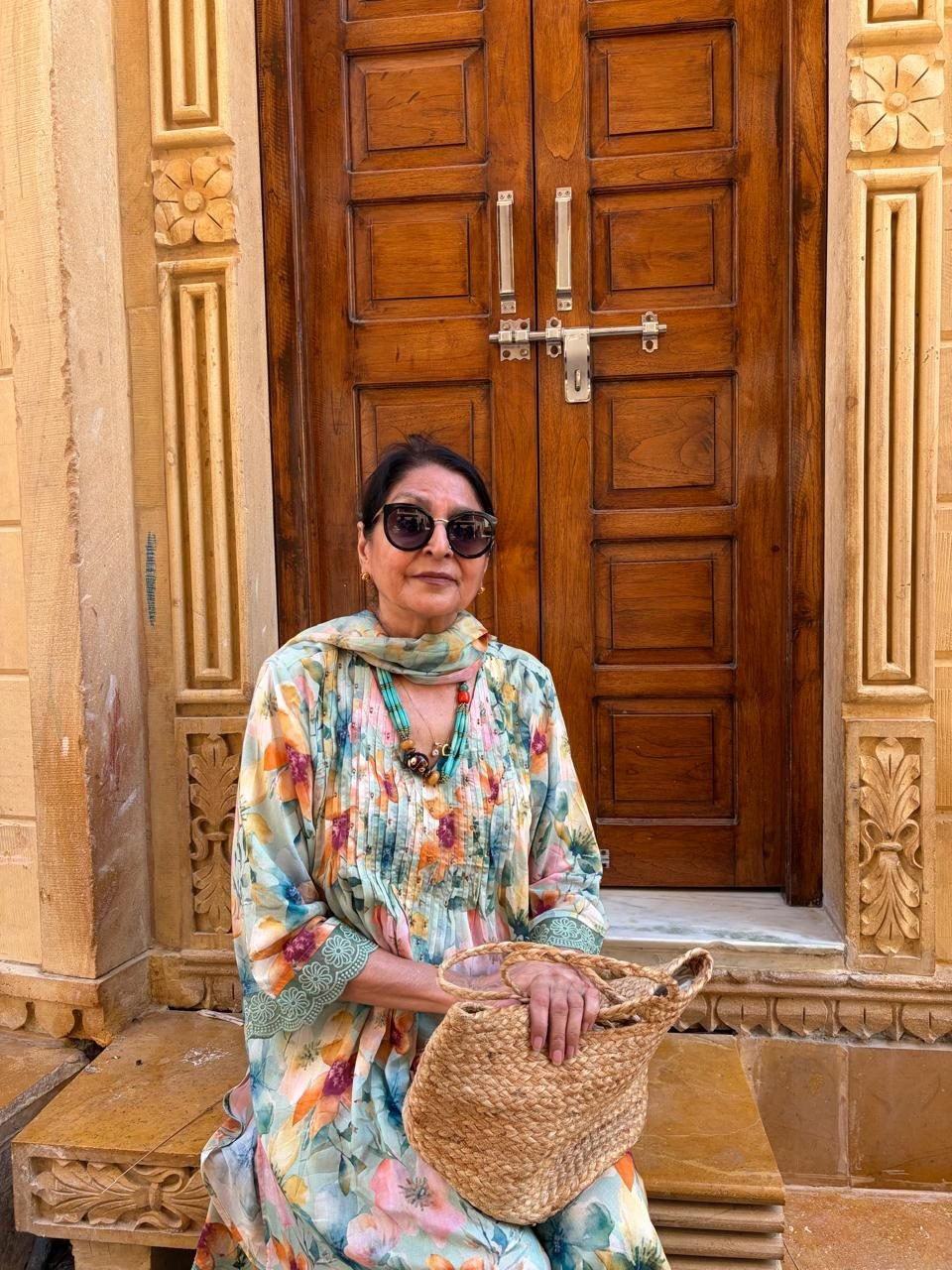
A small, useful photograph checklist
- One context view: show how the doorway or window belongs to the building, without blocking the lane.
- One detail: choose a bracket, border or carved section. Keep enough of its surroundings to make the detail understandable.
- One note: record the verified property name, location and any information from a permitted sign.
- One final check: have you included a person or private interior without permission? If so, reframe or put the camera away.
A phone is enough for this exercise. Wipe the lens and take a moment to steady it. If the light is difficult, a simpler composition is often more useful than applying a heavy filter that hides the surface you wanted to record.
Connect the detail to a real place
If you want more than a visual walk, choose a documented property and read its official description before visiting. Incredible India’s Patwon Ki Haveli page is a starting point for its merchant-house context. The haveli planning guide sets out the access and ticket questions to ask. Neither a photograph nor a heritage entry confirms today’s visitor rules.
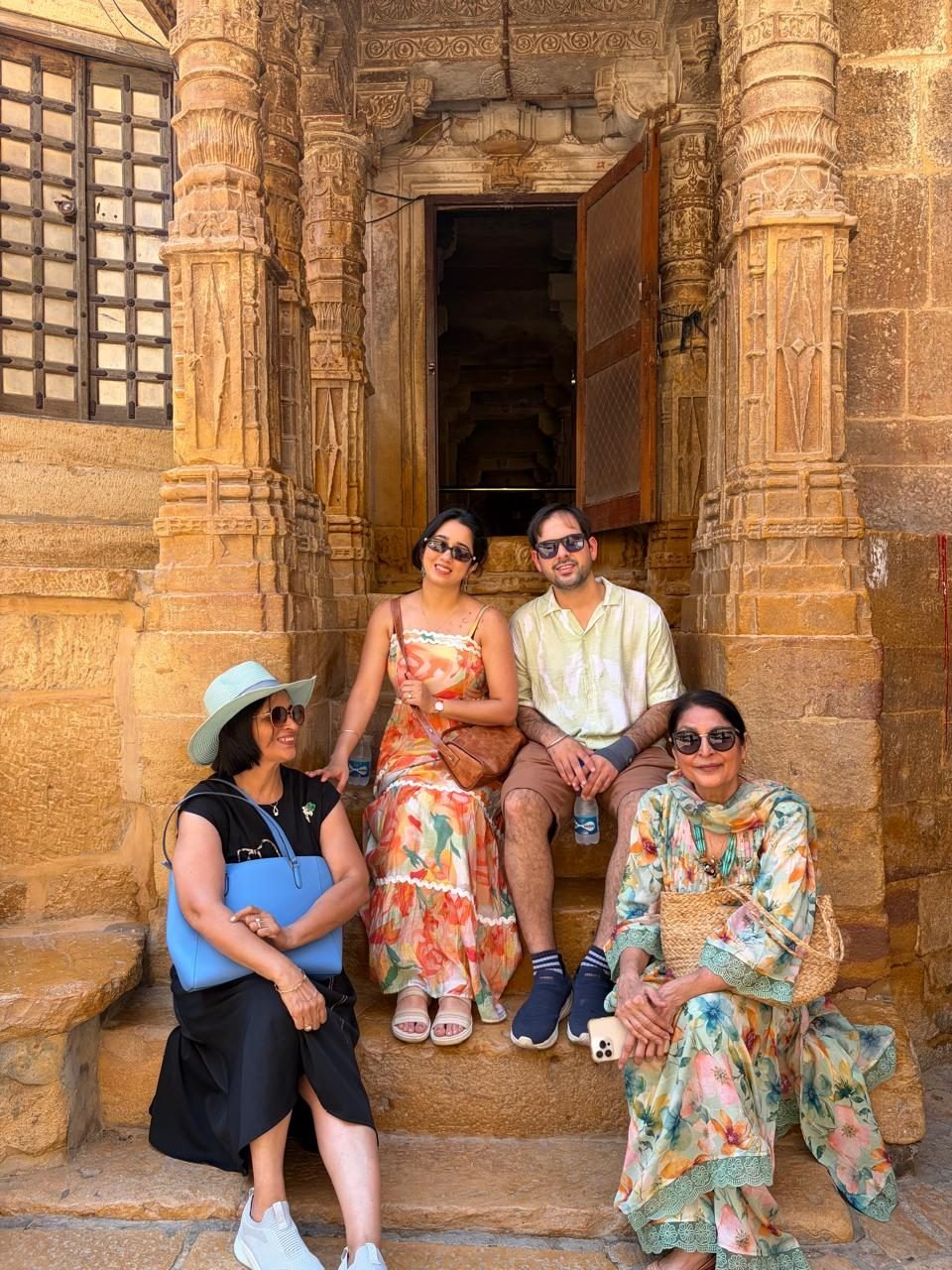
Treat the doorway as an entrance first
Some buildings are used as homes, businesses or places of worship. Ask before entering or photographing people. Keep a route open for anyone using the entrance, follow posted restrictions and do not move objects or sit on delicate features for a picture. If you need a break, find a suitable public place rather than assuming every step is available for seating.
Go at a pace that lets you watch your footing as well as look up. Uneven surfaces and a camera make an awkward combination. Stop safely before concentrating on a photograph, then put the phone away for the next section of walking.
Common questions
Do I need specialist architectural knowledge?
No. Begin with what you can observe: shapes, materials, repetition, support and light. Use a venue’s interpretation or a reliable heritage source for names and historical context.
Can I use these photographs to locate the buildings?
Not reliably for every image. They are original collection photographs, and the captions avoid attaching unverified property names. Choose a confirmed destination separately.
Where does this fit into a day in Jaisalmer?
Use it as a short observation exercise during a permitted walking route. If you want an overall itinerary, start with the fort-day guide and leave time for breaks.
Updated 13 November 2026 · Original photographs from Sundra’s collection. Heritage context: IGNCA and Incredible India.