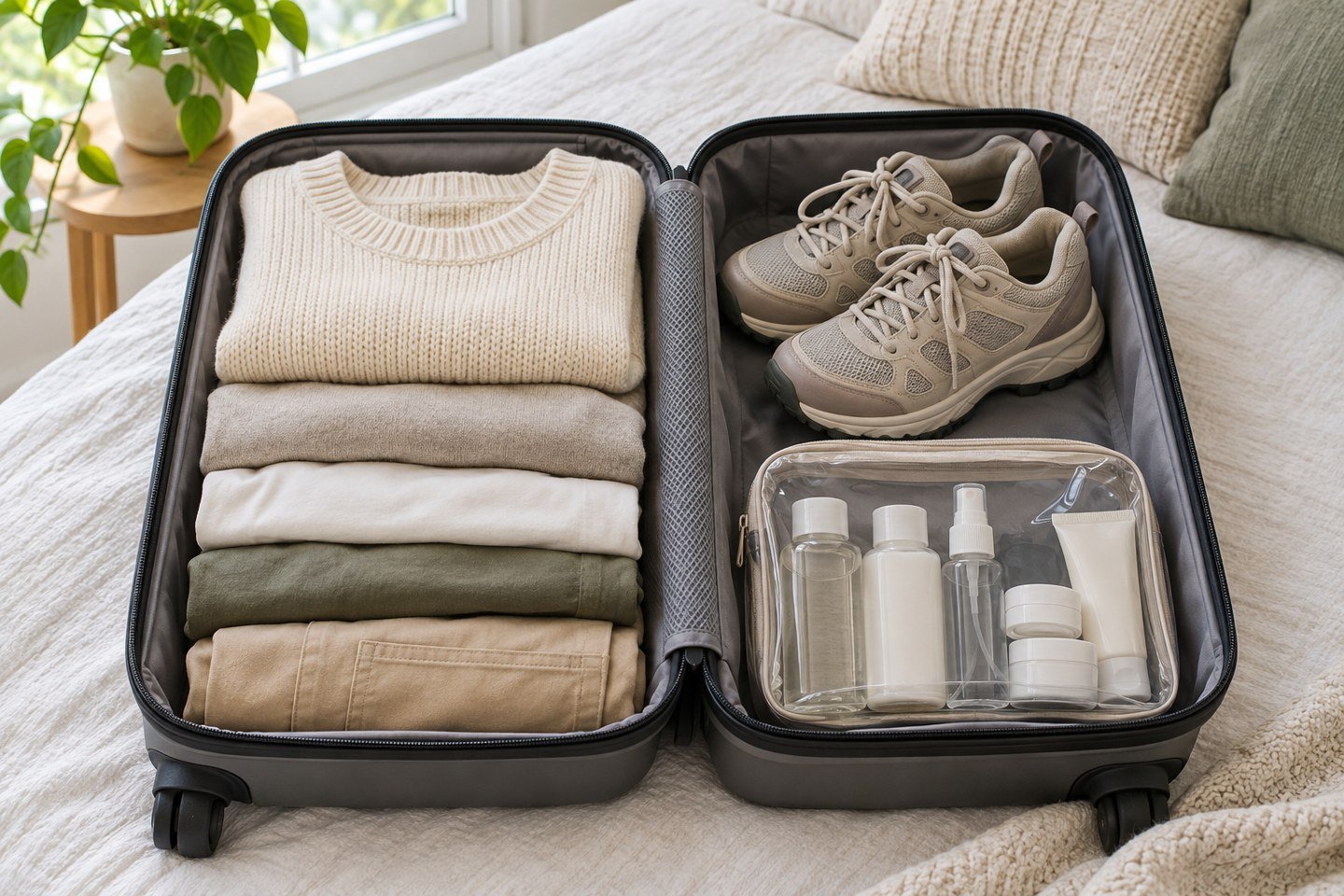
A small suitcase makes every item earn its place. My starting point for a packing plan is simple: comfortable clothes that work together, the essentials close at hand, and enough room to bring everything home without a struggle.
Plan outfits before counting pieces
Start with the activities on the itinerary rather than an arbitrary number of outfits. A walking day, a long journey and an evening meal may share the same trousers with a change of top. Lay everything out together and choose a small palette. If a piece only works with one other item, consider leaving it behind.
A practical starting list
For a short trip, consider three or four tops, two bottoms, one optional dress or smarter outfit, a light layer, sleepwear and enough underwear. Wear the bulkier shoes while travelling and pack one additional pair only if the itinerary needs it. This is a starting point, not a rule: weather, laundry access and personal needs decide the final list.
Keep essentials within reach
Put travel documents, medication, glasses, your phone charger and one change of clothes in a small personal bag. Keep toiletries together in a leak-resistant pouch and choose familiar products rather than experimenting away from home. Check your airline and departure airport requirements directly before packing liquids or batteries.
Leave breathing room
Packing cubes can group clothing, but they do not make an overweight bag lighter. Close the case, lift it and walk around with it before leaving. If it already feels awkward at home, remove something. The goal is a bag you can manage comfortably, not a perfectly filled suitcase.
I would rather repeat a comfortable outfit than spend a trip managing luggage. Save this list, adapt it to the journey, and keep a note of anything that comes home unused.
Try a three-part packing check
Build a small outfit grid
Write the activities down one side of a page: journey, walking, dinner and sleep. Put the clothing you plan to take beside each activity. Look for pieces that appear more than once. A neutral bottom and two different tops may cover the same situations as three complete outfits, while a separate pair of shoes can take up more space than you expect. Keep anything required for a specific occasion, but question pieces carried only for an unlikely change of mood.
Test the bag in the order you will use it
Pack once before the night of departure. Put the first-night items where you can reach them without unpacking the whole case. Keep documents, essential medication and items needed during the journey in the bag that stays with you, following the relevant handling requirements. Check that every pouch closes, then lift the packed case onto a surface at a comfortable height. A case that closes only when forced leaves little room to repack after use.
Use the return journey as feedback
Keep a short note after the trip: what was worn repeatedly, what was missing and what never left the bag. Separate a genuine weather contingency from an unnecessary duplicate. A personal packing list becomes more useful through these observations than through copying someone else’s exact number of tops. Save the edited list with the length and type of trip so it is a starting point for a similar journey, not a rule for every destination.
A useful question
Do packing cubes let me take more?
They group items and can make unpacking easier, but they do not change the airline’s allowance. Weigh the finished bag and leave enough room to put used clothing back.
Updated 13 November 2026 · Expanded with practical planning details and clearer next steps.