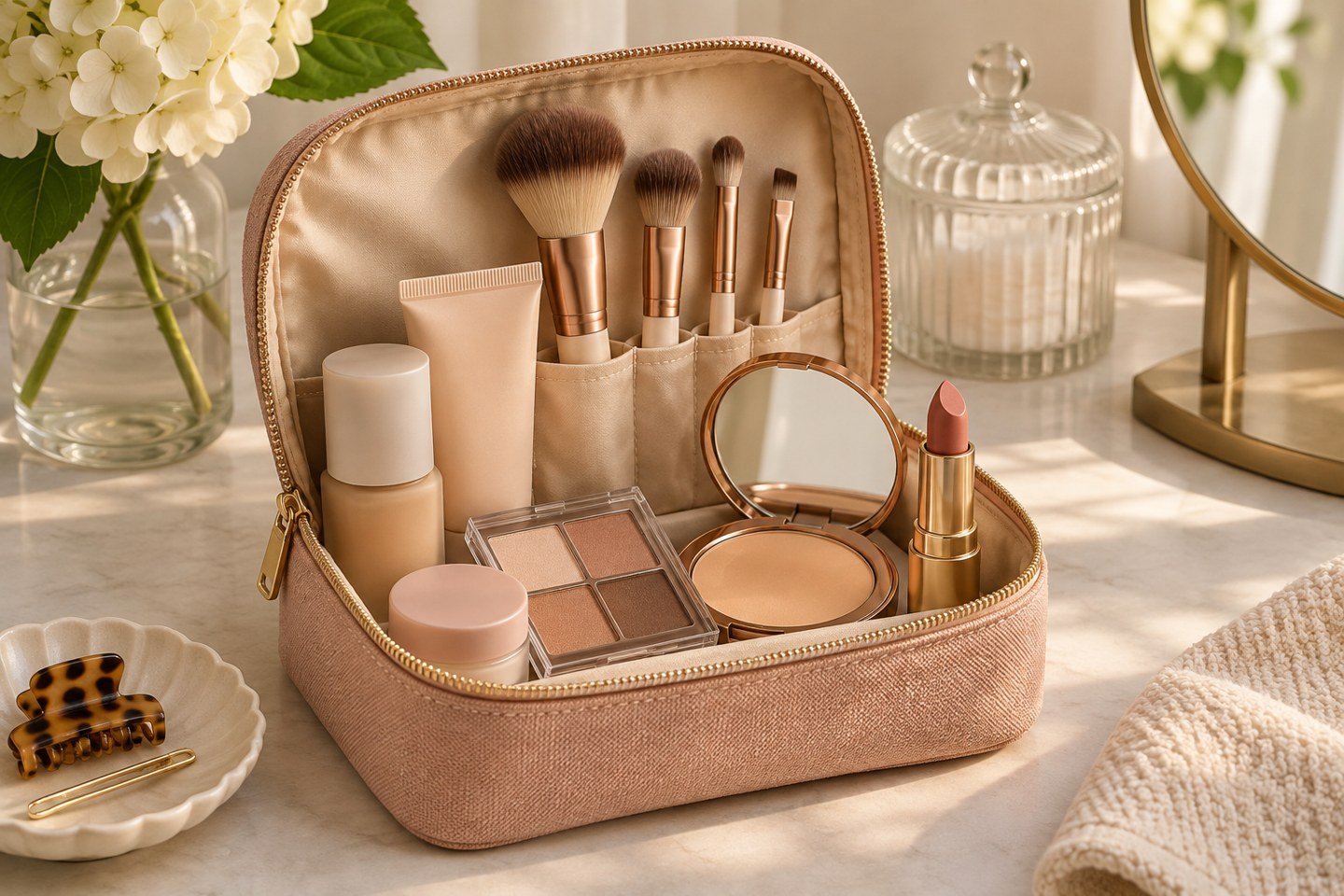
A crowded beauty bag can make an ordinary morning feel more complicated than it needs to be. I would start an edit with the things that actually earn their space, rather than another shopping list.
Empty it before organising
Lay everything on a clean surface and separate everyday essentials from occasional extras. Check packaging dates and the period-after-opening symbol where provided. Discard products that have changed smell or texture, and do not keep a favourite simply because there is still some left.
Choose by purpose
A simple kit might include familiar skin care, a few makeup basics and the tools needed to apply them. There is no universal number of products. Keep what suits your routine and avoid adding steps just because they look attractive in someone else’s bag.
Clean the tools and the bag
Follow each tool’s care instructions and let washed brushes dry fully before storing them. Wipe the inside of the bag and check lids for leaks. Separate anything sharp or fragile so it does not damage the rest of the contents.
Keep a small replacement note
Write down a product name when it is nearly finished. This makes it easier to replace something useful without buying several similar items. If a new product causes irritation, stop using it; a fuller bag is never worth uncomfortable skin.
The aim is an easier routine. A bag that closes comfortably and lets you find what you need is enough.
Organise the bag around actual use
Make three groups before buying an organiser
Separate everyday items, occasional items and things that need attention. Check the opening and storage guidance on the packaging; keep a simple opening-date note when it helps. Do not transfer products into unlabelled containers just to make the bag look coordinated. Keep the product name and instructions available, particularly when similar-looking items serve different purposes.
Create a small travel version from the same routine
Choose only what you expect to use, with familiar products and the clean tools needed for them. Put containers that could leak in a separate pouch and protect fragile items. Before a flight, check the current departure-airport and airline rules rather than assuming a previous trip’s arrangement still applies. A travel kit should be manageable when the hotel counter is small, not only when everything is spread out at home.
Keep a replacement list instead of a duplicate drawer
Record the exact name and shade of an item you use regularly as it runs low. This gives you a reason to replace it without automatically buying several alternatives. Recheck the bag after a normal week: items that are never reached for may belong in occasional storage. Leave space so tools and packaging are not damaged every time the zip closes.
A useful question
Should every item stay in the everyday bag?
No. Keep special-occasion products elsewhere if you rarely use them. A smaller daily selection is easier to inspect, clean and find.
Updated 13 November 2026 · Expanded with practical planning details and clearer next steps.